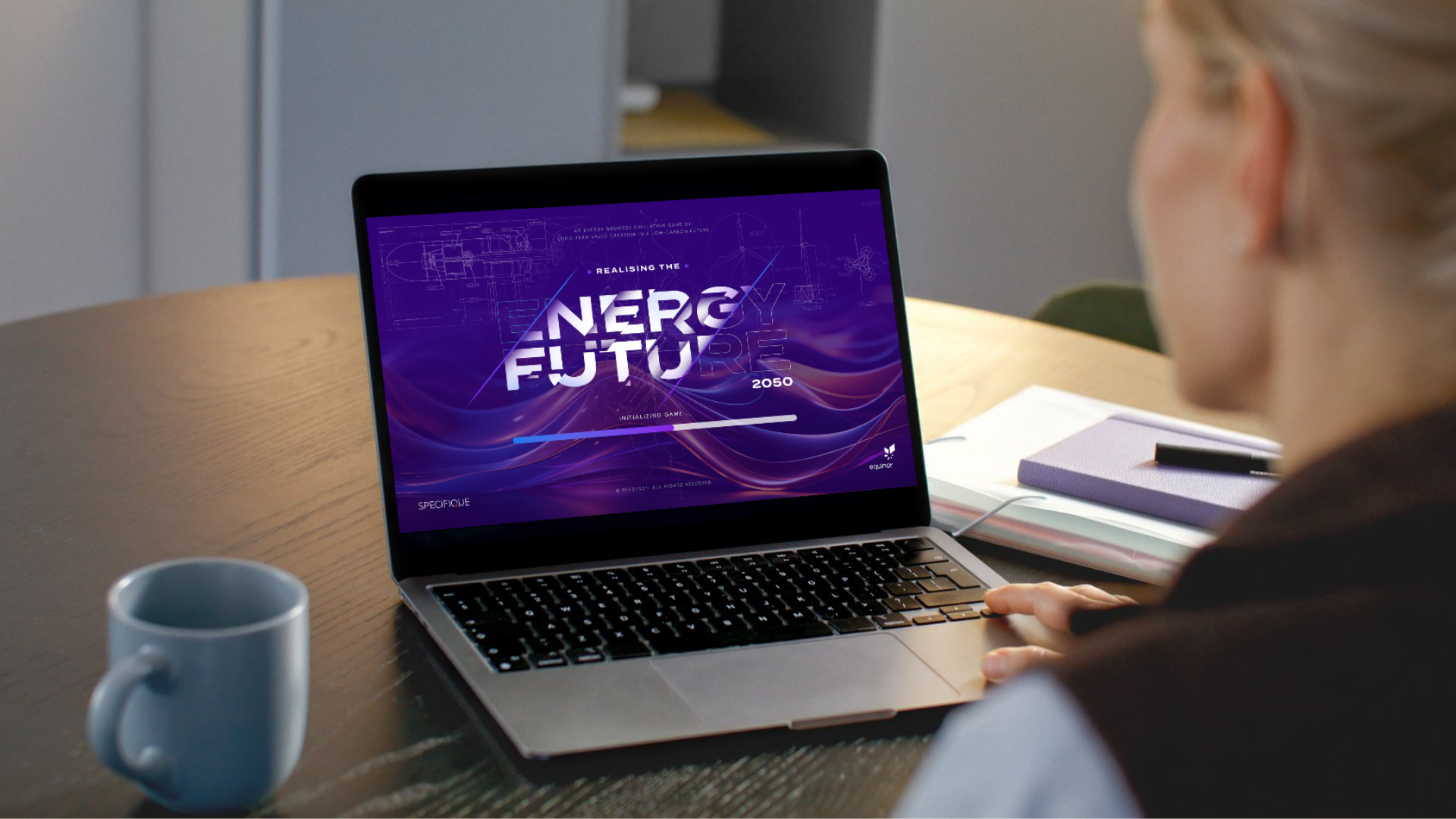
Energy 2050 is a business simulation tool that helps participants understand how energy companies develop in a market shaped by uncertainty, technological change, and increasing sustainability requirements. It gives participants from different backgrounds the opportunity to explore strategic choices and see how these play out over time in a realistic environment.
The tool is developed by Specifique and is based on more than 20 years of experience with learning and organisational development in the energy sector. The simulation game is used in training and development programs at companies such as Equinor, Hafslund, and Statkraft.
The simulation game takes place in the fictional country of Exlandia. Participants work in teams as energy companies and develop a strategy for the next 25 years. They build and manage a portfolio of energy projects while adapting to changes in market conditions and geopolitical developments. Throughout the simulation, they must balance financial performance, carbon footprint, and reputation, and understand how these factors influence each other over time. Key elements such as cash flow, net present value, taxation, CO2 costs, and price fluctuations are integrated into the model, providing a broad view of the complexities of decision making in the energy sector.
Two main versions of the simulation tool have been development for different target groups. One focuses on oil and gas and explores the balance between short term value creation and long term transition. This version is particularly relevant for technical environments within fossil energy. The second version focuses on renewable energy and low carbon solutions such as wind, solar, hydrogen, and CCS, while also addressing the need to balance the energy mix during the transition from fossil fuel to renewable sources.
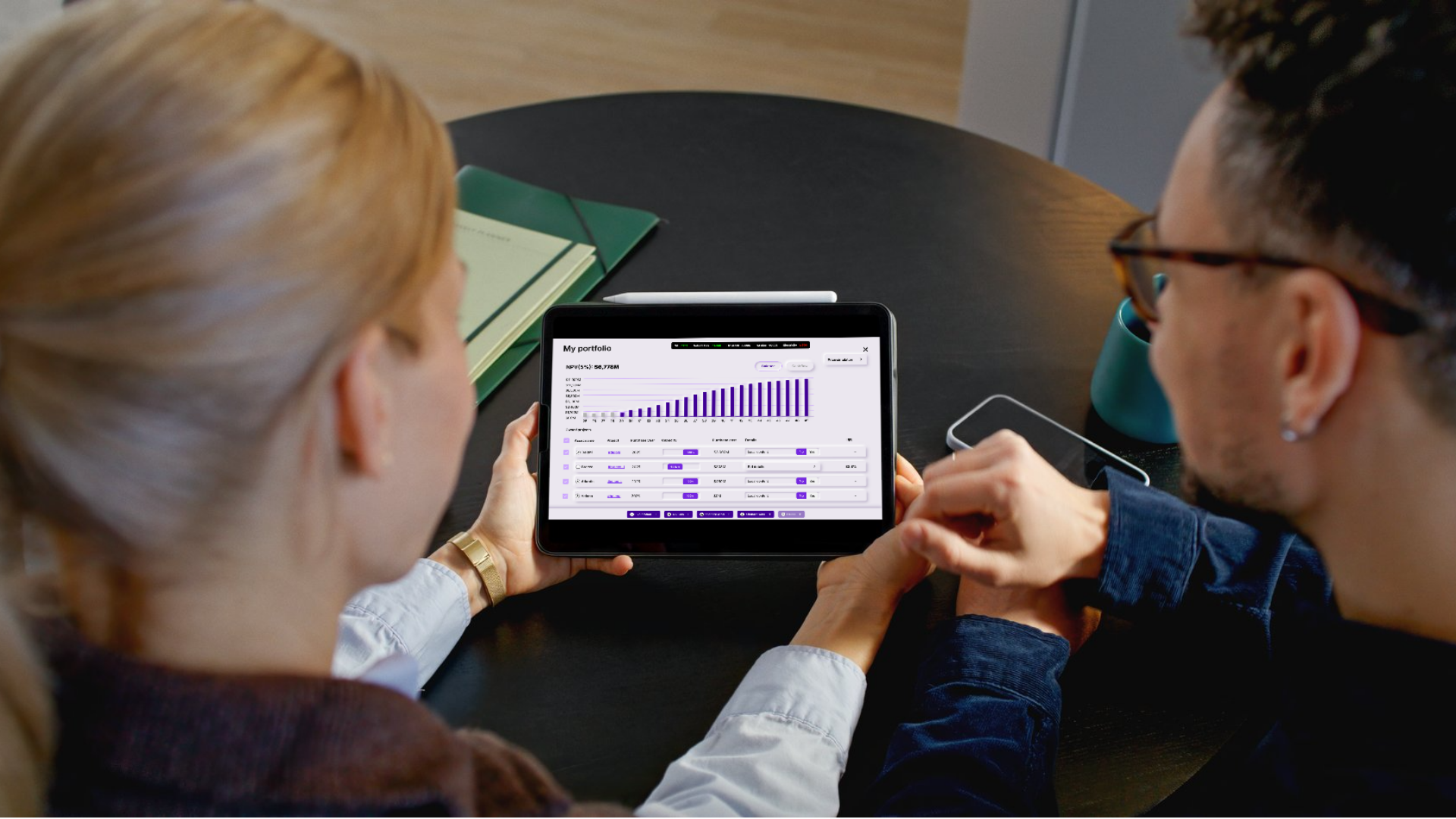
The purpose of the simulation tool is to strengthen understanding of how strategic choices are connected and what consequences they may have. Participants gain experience in decision making under uncertainty and develop skills in strategy, risk management, and collaboration across disciplines. The simulation game serves as a practical tool for exploring strategic and commercial decision making in a dynamic and volatile market.
Our experience is that participants develop a stronger understanding of business dynamics, improve collaboration, and take a more holistic approach to the energy transition. The format also offers an interactive way for organisations to work with training and development.
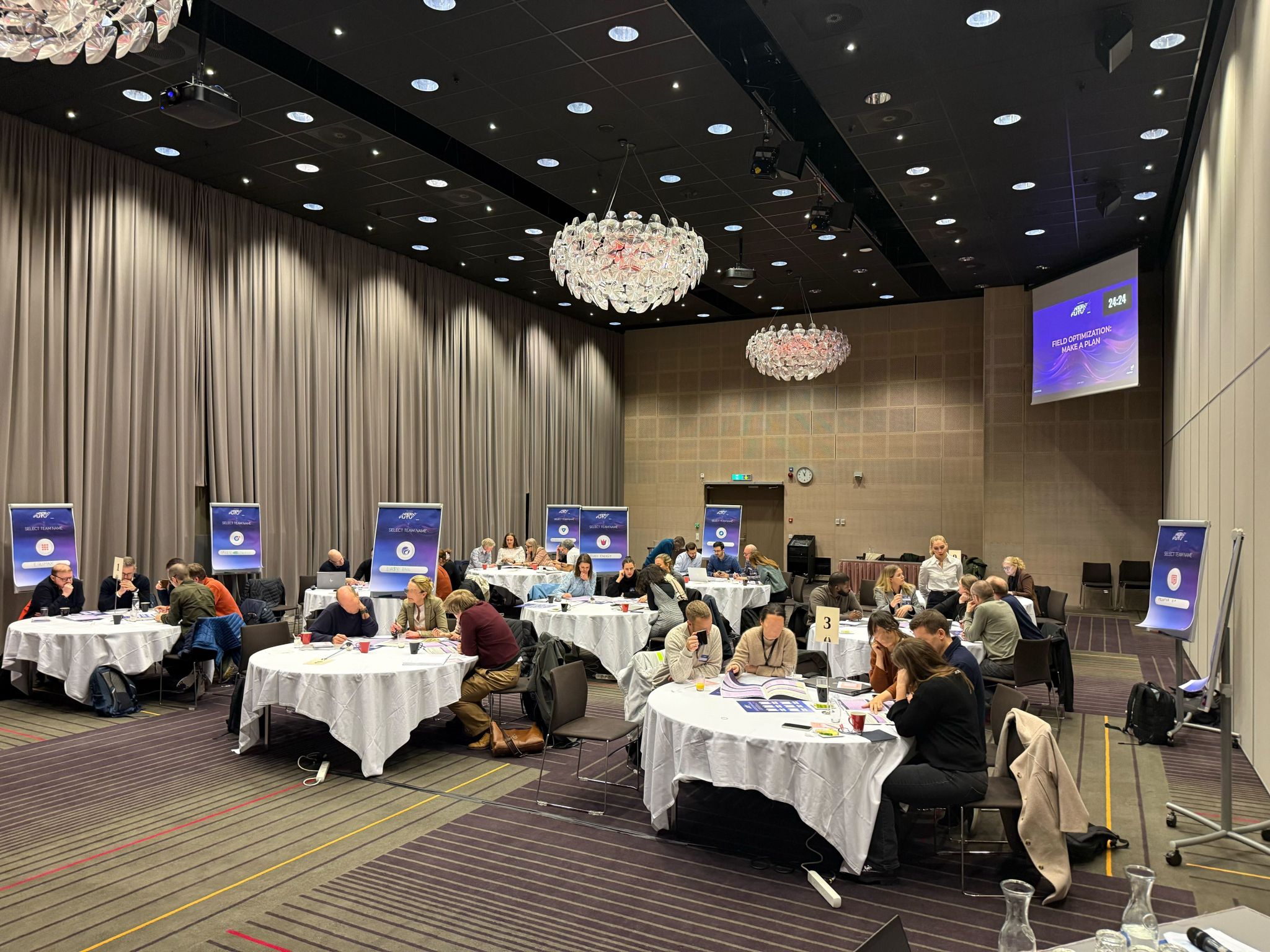
The simulation tool is used in a range of contexts, and is part of training and development programs for several of our clients, including Subsurface Upskilling and Developing Energy Projects in Equinor. It is also used in leadership development, recruitment, and in collaboration with educational institutions. The simulation game can be delivered as physical or digital workshops and adapted to different needs. The sessions are facilitated by Specifique.