
Safety is not just about rules, systems and procedures – it’s about the choices people make every day. On the production floor, during service assignments, and in the daily interactions between leaders and employees. When Elopak reached out to us, their ambition was clear: they wanted to strengthen the company’s safety culture, with a particular focus on middle managers and their role in turning ambition into action at work.
Elopak is a Norwegian industrial company that produces paper-based packaging, with operations across multiple countries. In such a global organisation, safety maturity, practices and culture vary. Although Elopak has worked systematically with health and safety for many years and has robust safety systems in place, they experiences that compliance and safe decision-making in daily operations were not always consistent. In particular, they identified a gap between expectations and actual practice – and a need to strengthen leaders’ confidence and ability to act when facing safety-related situations.
The company’s must win battle was to equip middle managers with the tools, support, and confidence to recognise risks and address them with clarity and assurance. The focus was on proactive safety leadership – acting early, rather than reacting after incidents occur.
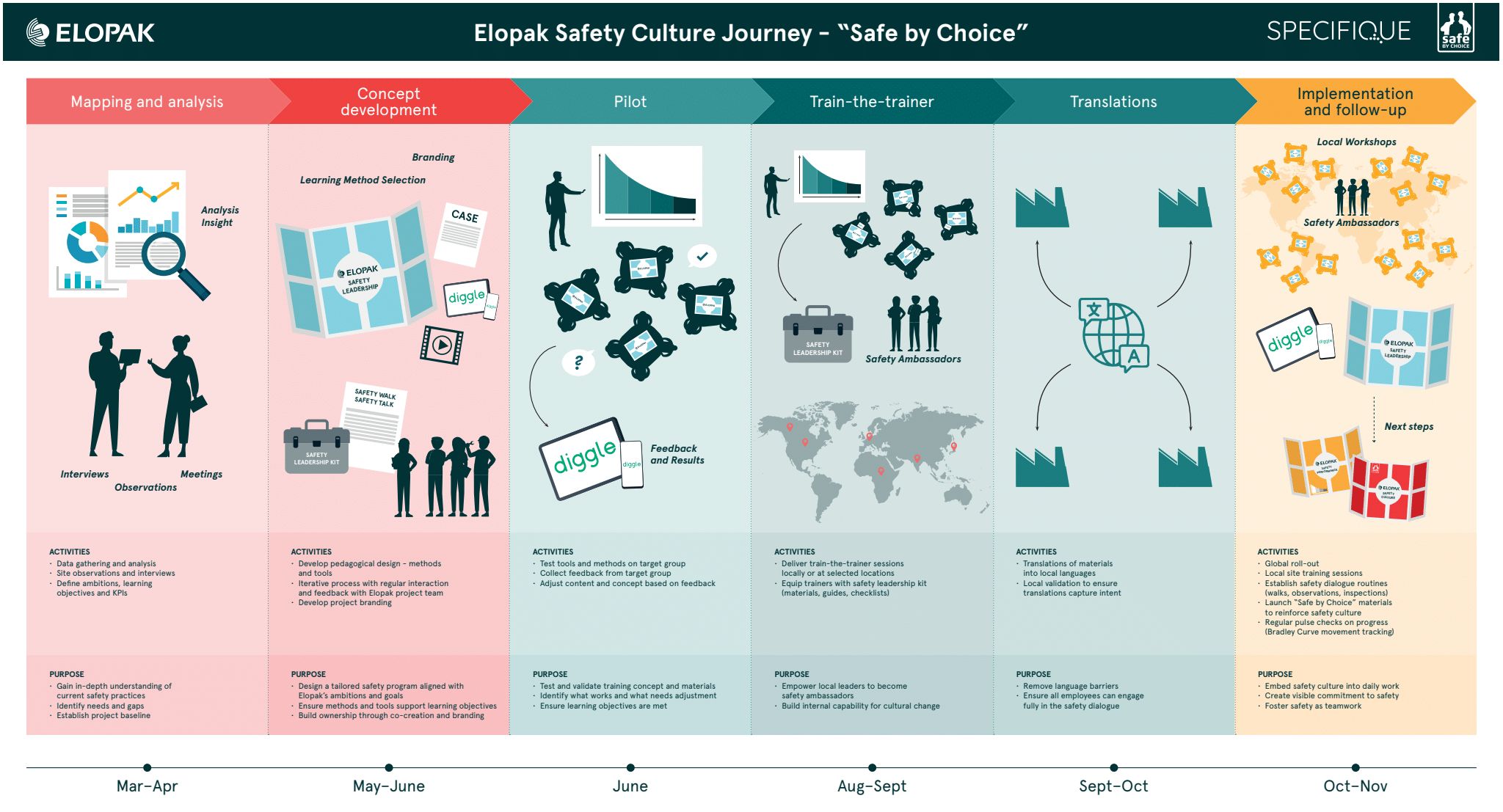
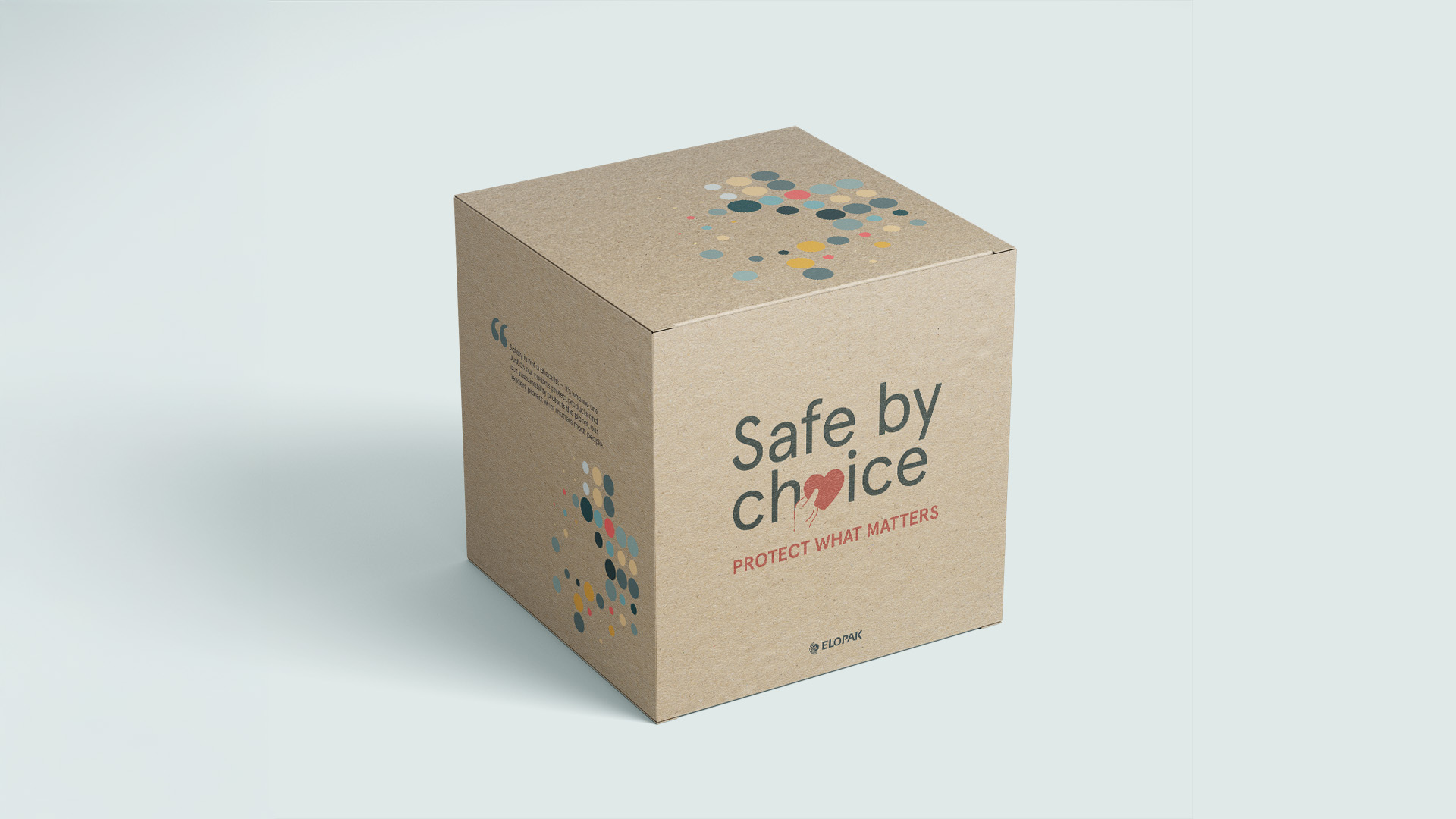
To meet this need, we developed a Safety Leadership Program closely aligned with Elopak’s safety strategy and their ambition to become Safe by Choice. The program consists of three modules that together address safety culture, day-to-day practice, and leadership.
The first module focuses on creating a strong safety culture and the role leaders play as visible role models. Participants explore what actually influences safety in everyday work and how leaders’ behaviours set the standard for the rest of the organisation.
The second module is about safety in practice, grounded in real-life work situations. Leaders train on identifying risks early, using observations and reporting actively, and taking ownership of follow-up. The third module turns the focus directly to the leadership role and how safety is led through communication, trust, and learning. Leaders work hands-on with how to talk about safety, give safety feedback, follow up incidents, and build psychological safety within their teams.
The program is designed as an active and engaging learning process, where participants work with real cases from their daily work. Dialogue, reflection and experience sharing are central, and leaders are given concrete tools they can apply in their teams. The content is developed to work across countries and cultures and has been translated into local languages.
In November 2025, we ran the first pilot of the program, which provided valuable input for adjustments and further development. In January 2026, we conducted a train-the-trainer session, where internal resources and leaders at Elopak were trained to facilitate the program themselves. The goal was to build internal capability and ensure that Elopak can deliver and follow up the training independently over time.
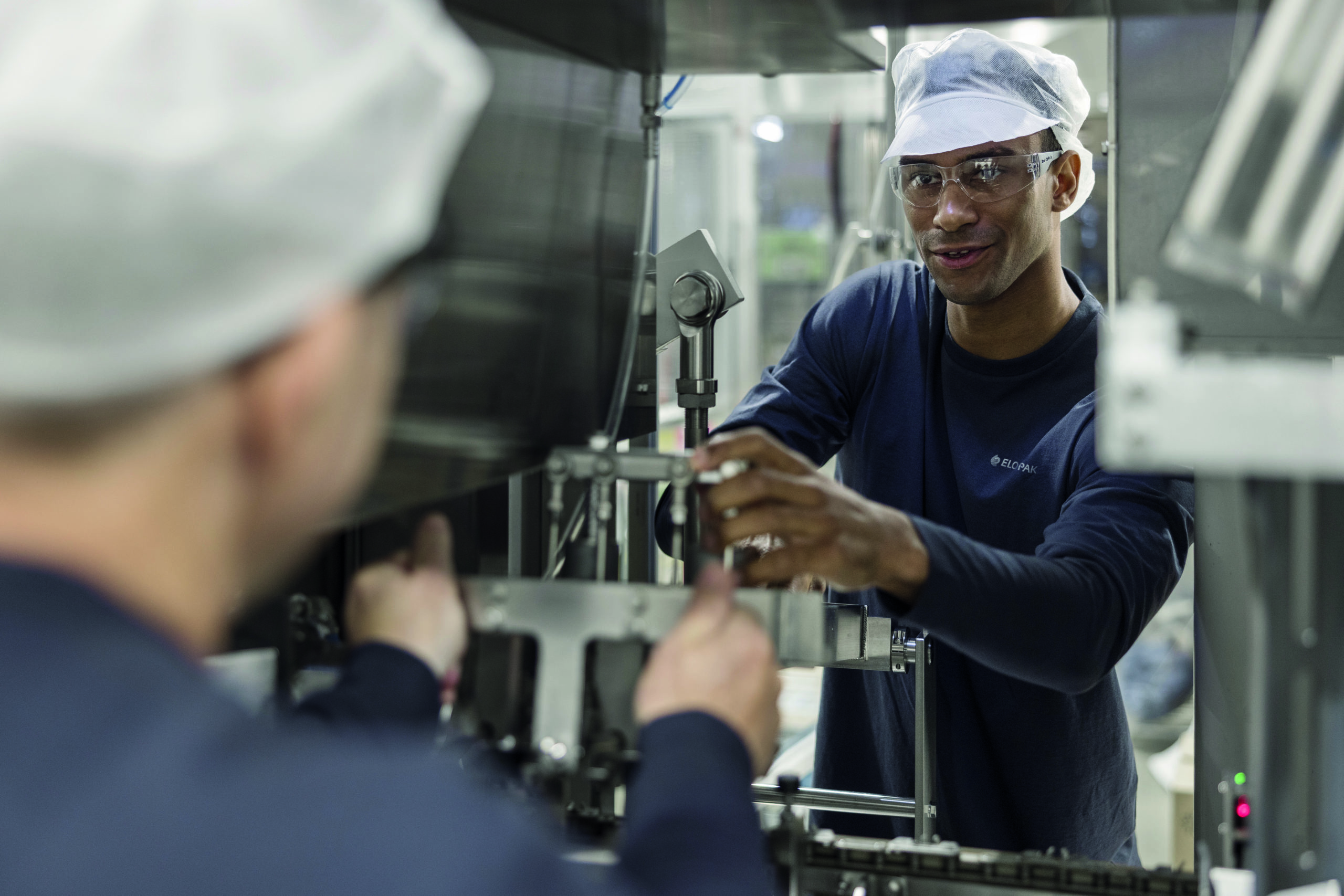
Feedback after the train-the-trainer session has been positive. The program is experienced as relevant, practical and useful, and provides leaders with a shared language for talking about safety in a more constructive and confident way. Many also highlight the value of having concrete tools they can use directly with their teams, as well as increased awareness of their own role as safety role models.
Site Manager, Montreal, CA
The project has given Elopak a strong foundation for further strengthening its safety culture, with leaders who take greater ownership and make safety a clear priority. The program is now ready for global rollout and provides the organisation with a shared direction and practical tools to take one step closer to becoming Safe by Choice.