
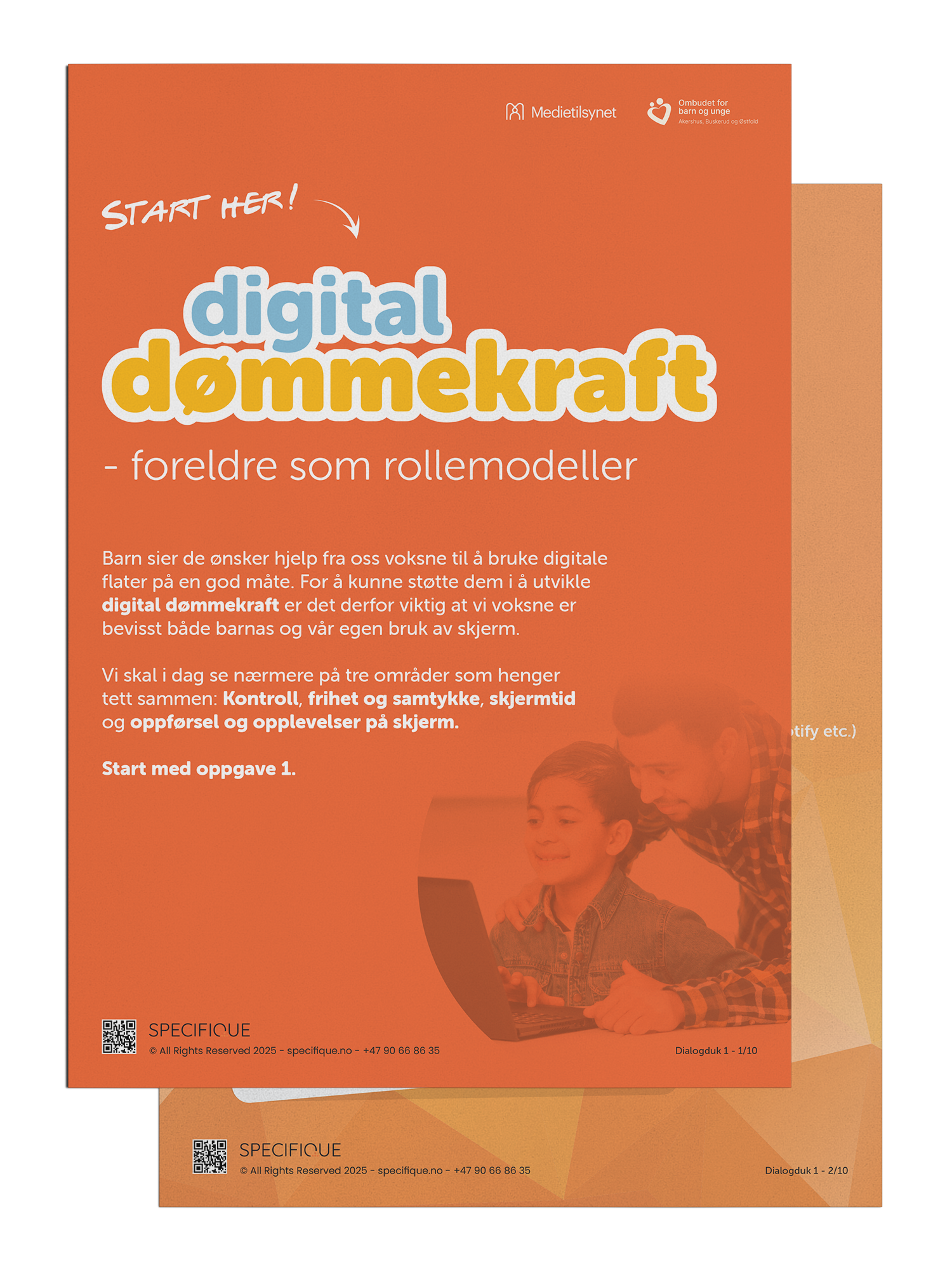
Digital Awareness is a dialogue-based tool designed for parents, guardians and professional who want support in talking about children’s digital lives. The tool is primarily used in parent meetings and sessions at primary school level, where adults come together to explore challenges, choices and responsibilities related to children’s online presence.
Since its launch in 2018, children’s digital lives have evolved rapidly. New platforms, changing user patterns and increased attention to issues such as privacy, age limits and responsibility have made the need for meaningful conversations more important than ever.
A tool for dialogue and reflection
Digital Awareness was developed in collaboration with the Norwegian Media Authority and the Ombudsman for Children and Young Adults. From the outset, the ambition has been to provide adults with a practical and accessible tool for addressing complex topics – without moralising and without requiring expertise.
Through dialogue and reflection, participants develop a shared language for discussing boundaries, online behaviour, information sharing, and the role of adults as role models in children’s digital lives.
Adapted to current challenges
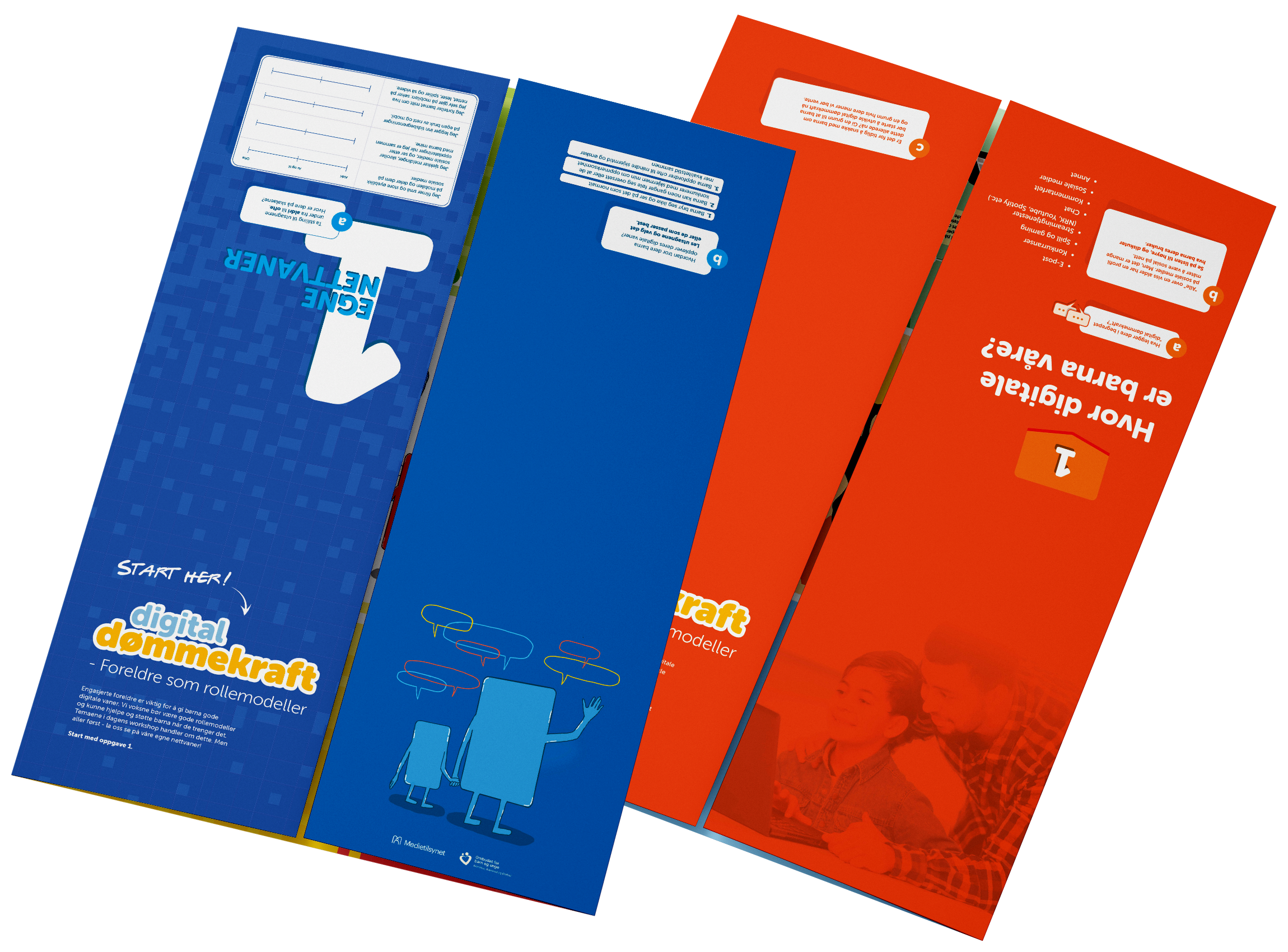
In 2025, Digital Awareness was revised to ensure that its content, cases and topics remain relevant, reflecting digital developments since the original launch in 2018.
The concept has been designed with a long-term perspetice. Further adjustments are being considered for 2026, depending on potential changes in policies and regulatory frameworks related to age limits, regulation of digital services, and children’s rights online.
From conversation to shared mindset
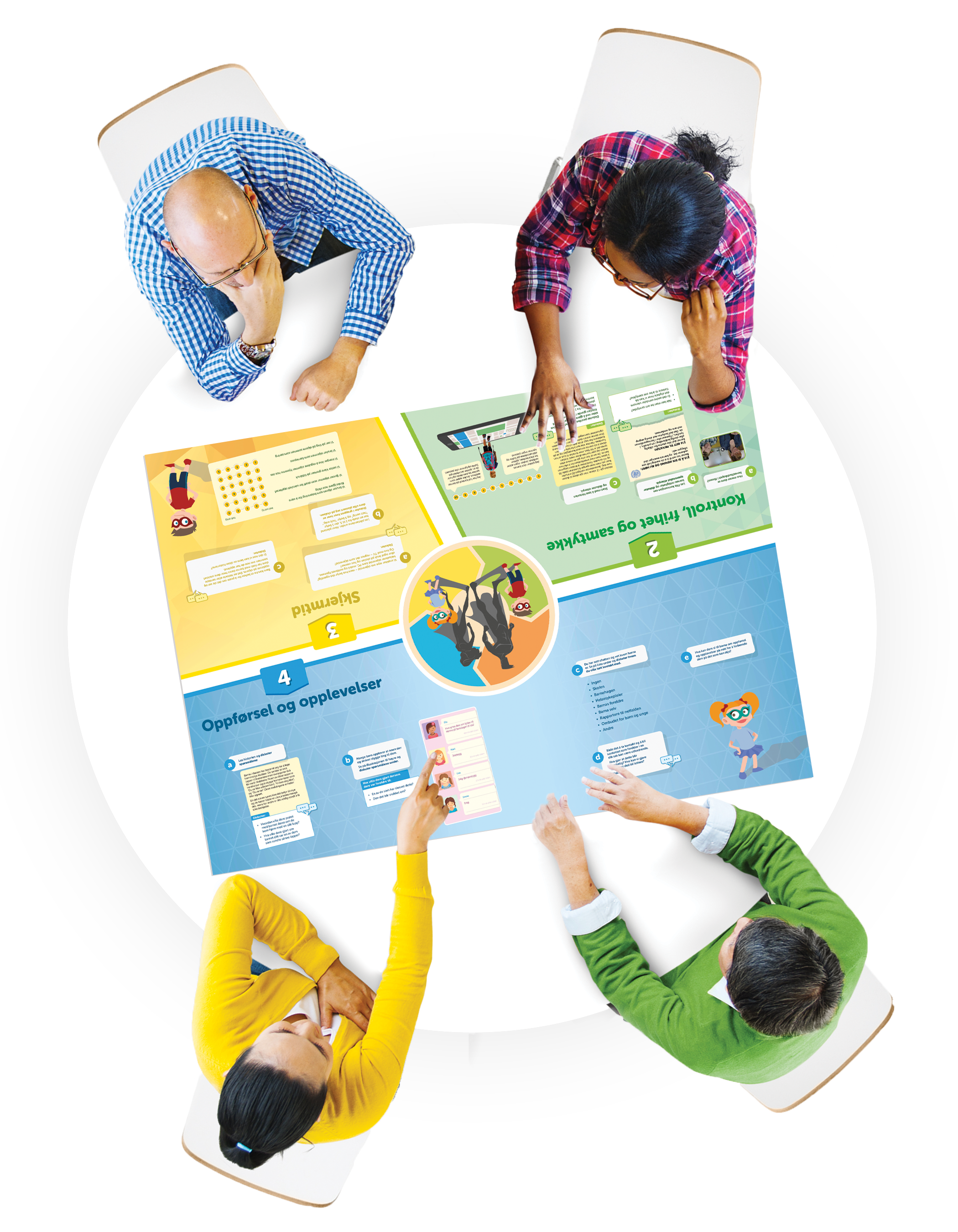
Digital Awareness is designed for local use by schools, municipalities and other organisations. Sessions are facilitated by resources who are familiar with the target group. With a clear structure and accompanying facilitator materials, the tools support meaningful dialogue and helps build a shared understanding and mindset among particiants.
The result is a format that strengthen adult’s confidence as role models, and contributes to more conscious and reflective choices in children’s digital lives.
Read more about the background for the project here.